
Summary
Academic environments often create anxiety around asking questions, staying organized, and keeping up with coursework. Research shows many students experience academic stress, which can discourage participation and peer collaboration. As a result, students increasingly rely on digital communication tools outside the classroom.
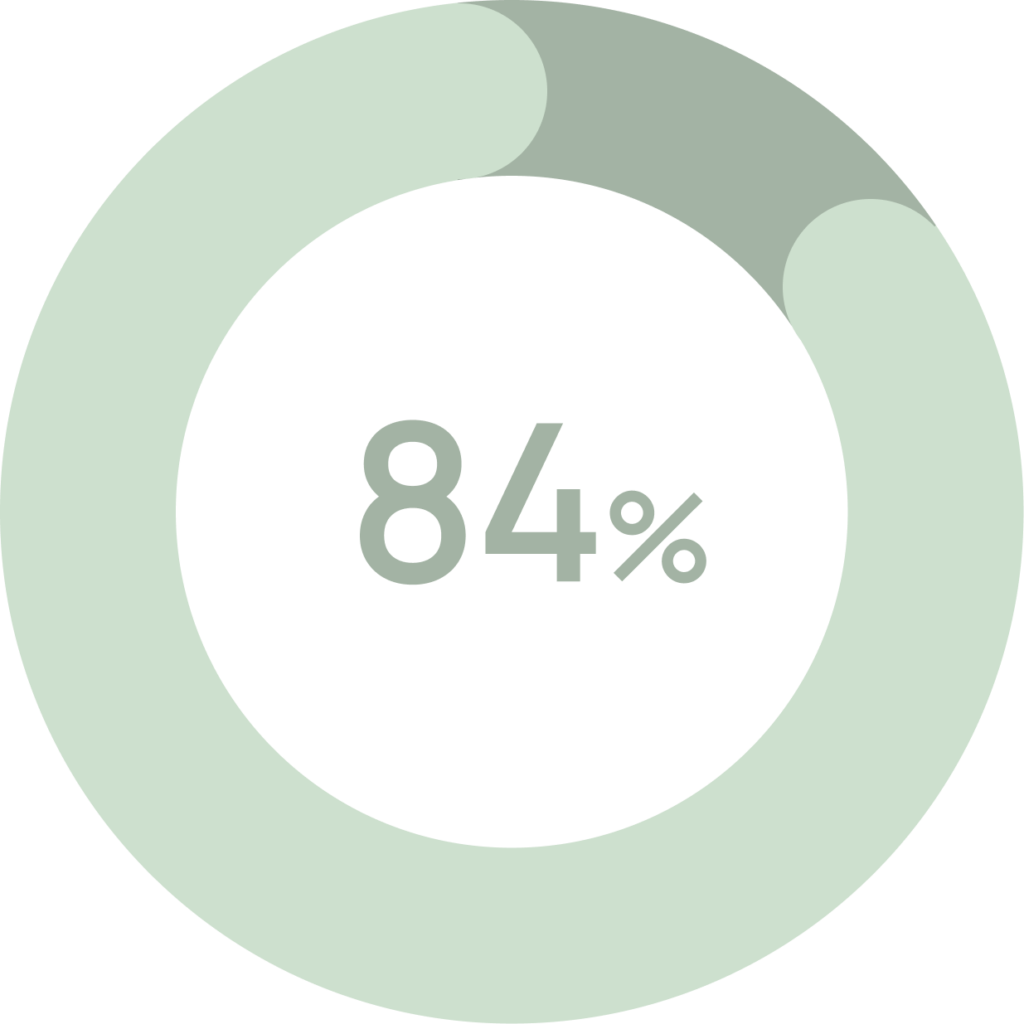
of the college students reported that they never ask questions in class.
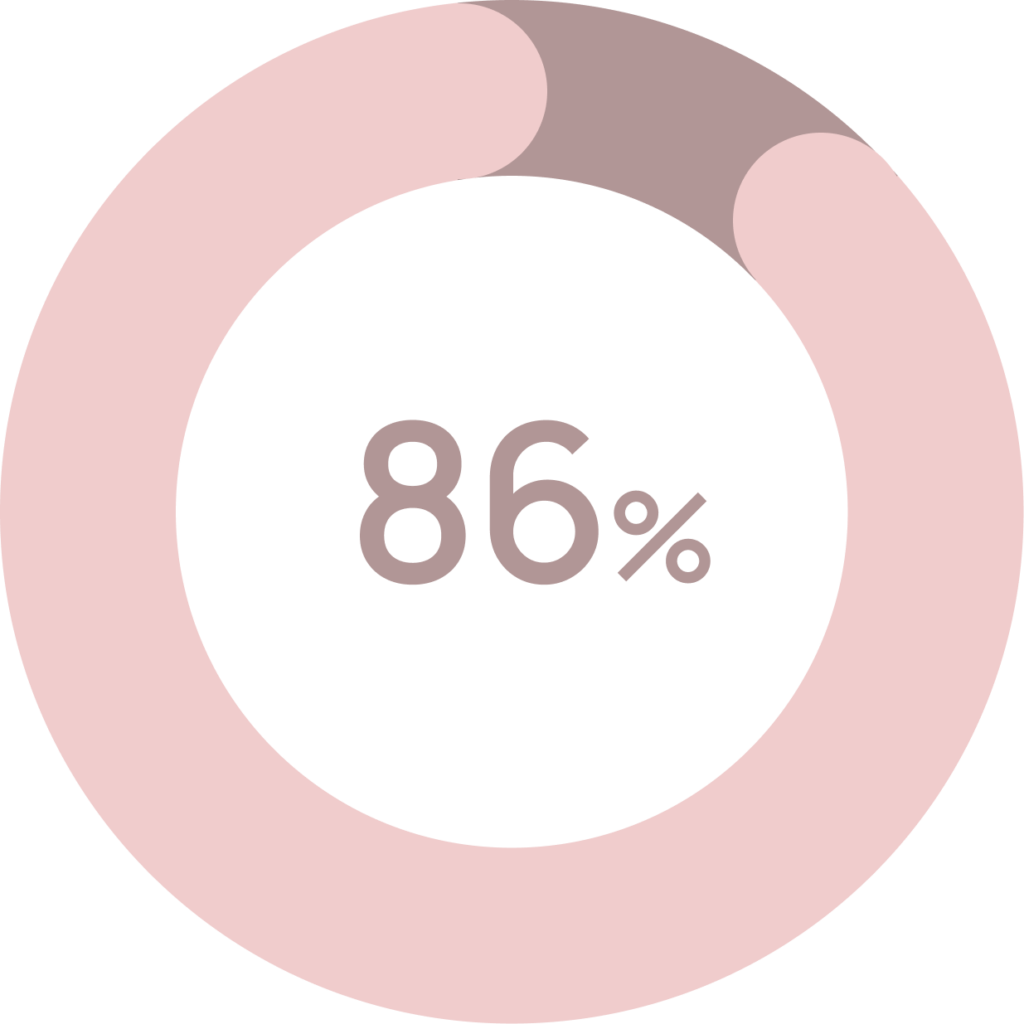
of the college students reported that they never answer questions in class.
The Problem
Students rely on multiple disconnected platforms to manage coursework and communicate with peers, creating friction, distraction, and unnecessary cognitive load. Existing tools are not designed to support focused, class-centered collaboration.
Core Experiences
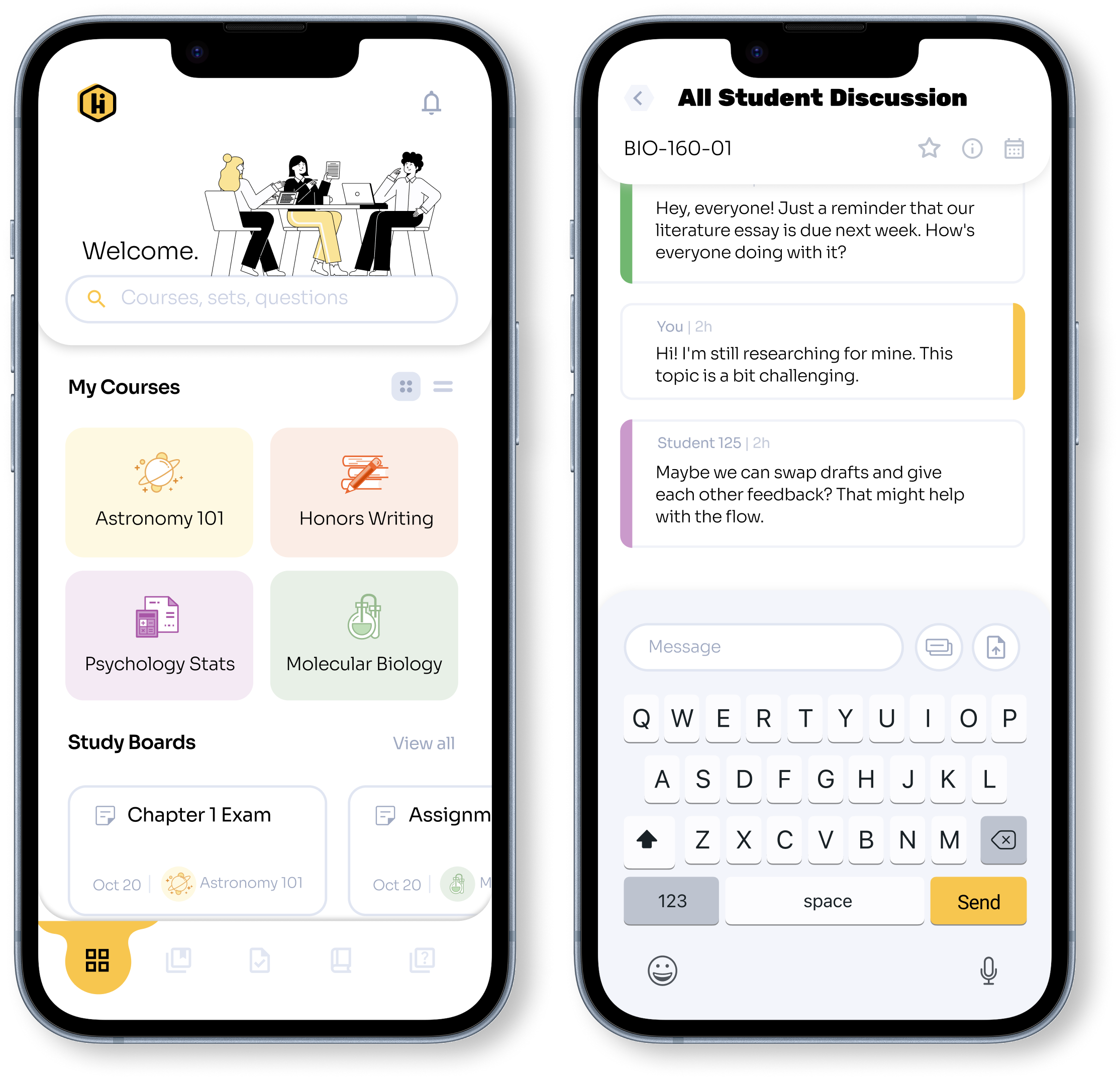
Study Groups & Collaboration
HIVE provides students with tools to connect and communicate with peers outside the classroom. Study groups can be created, shared resources are easy to access, and discussion features allow students to collaborate on assignments, projects, and exam preparation.
Anonymous Q&A Support
The platform includes an anonymous discussion feature, allowing students to ask questions and participate without revealing their identity. HIVE also provides spaces for students to seek help, share concerns, and receive guidance from peers.
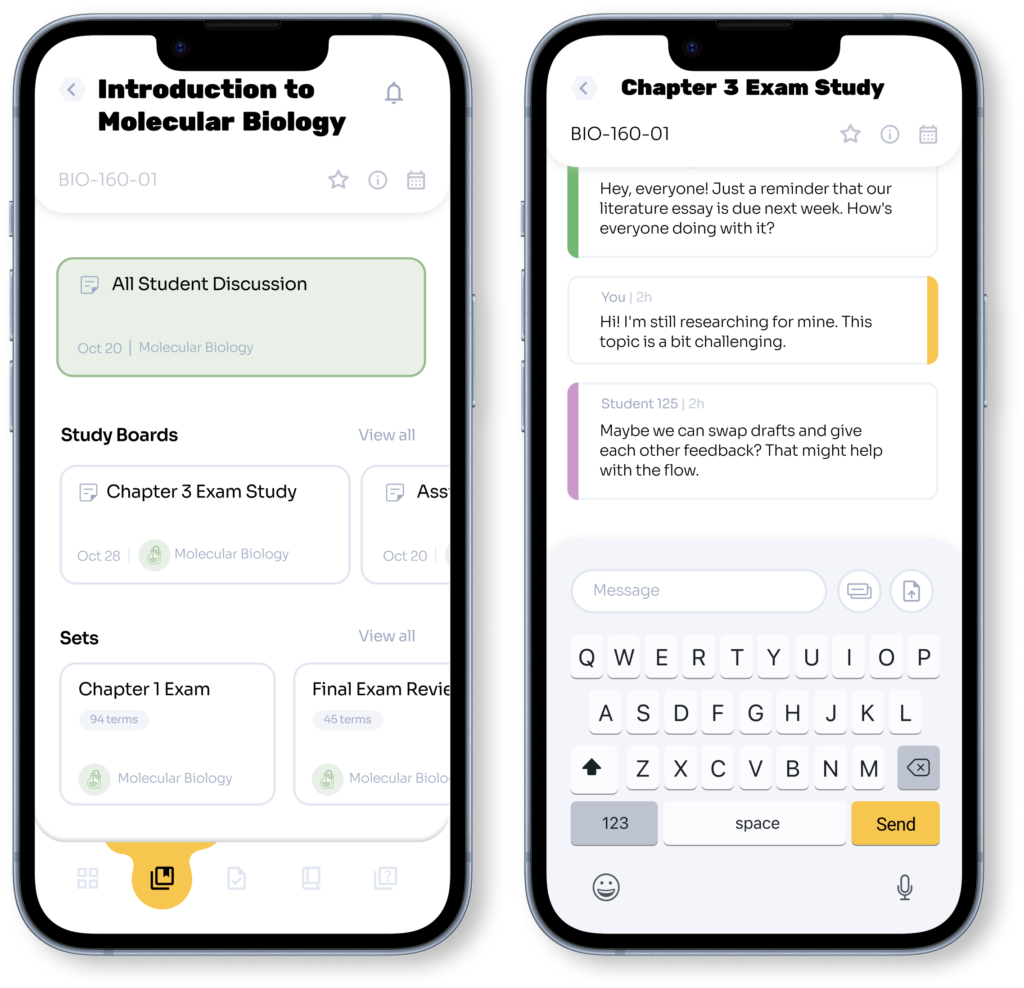
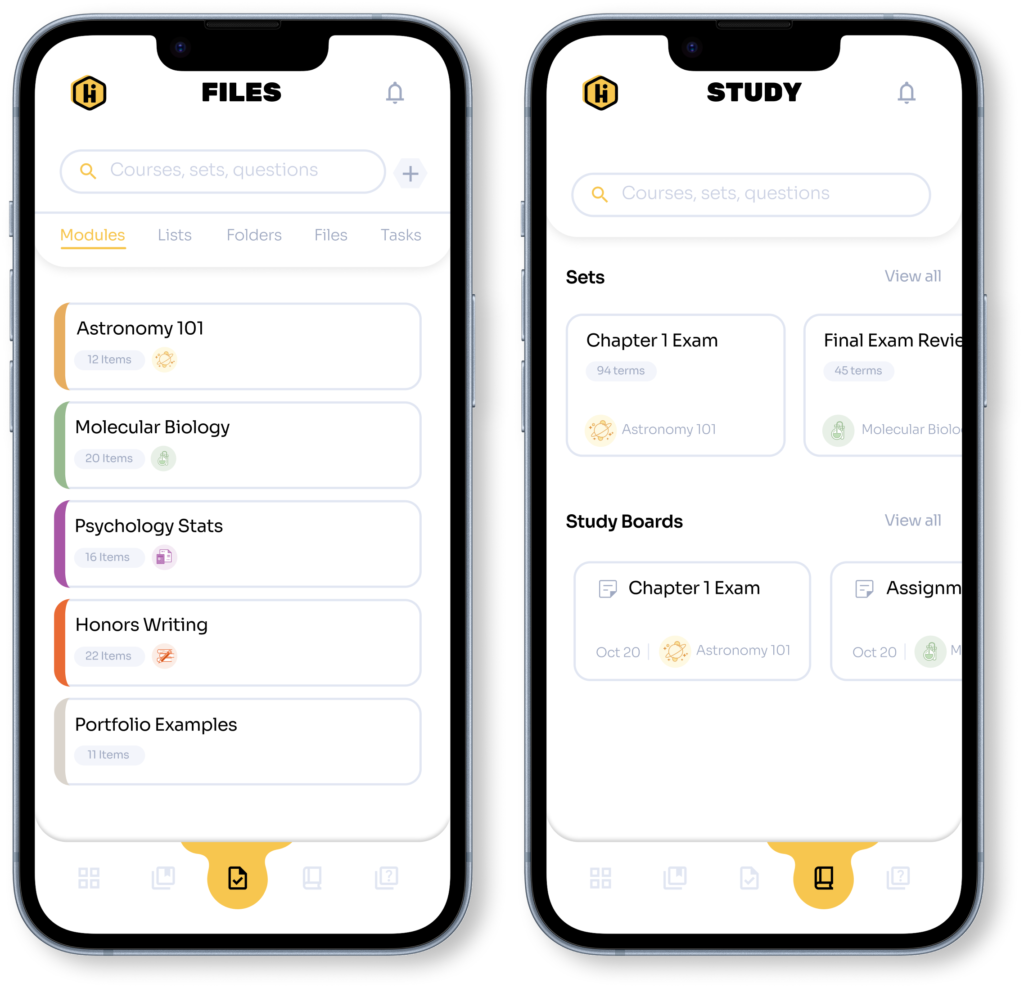
Resource Hub & Planning Tools
HIVE centralizes study materials, lecture notes, and other resources in one accessible location. Scheduling and planning tools help students organize study sessions and track deadlines efficiently.
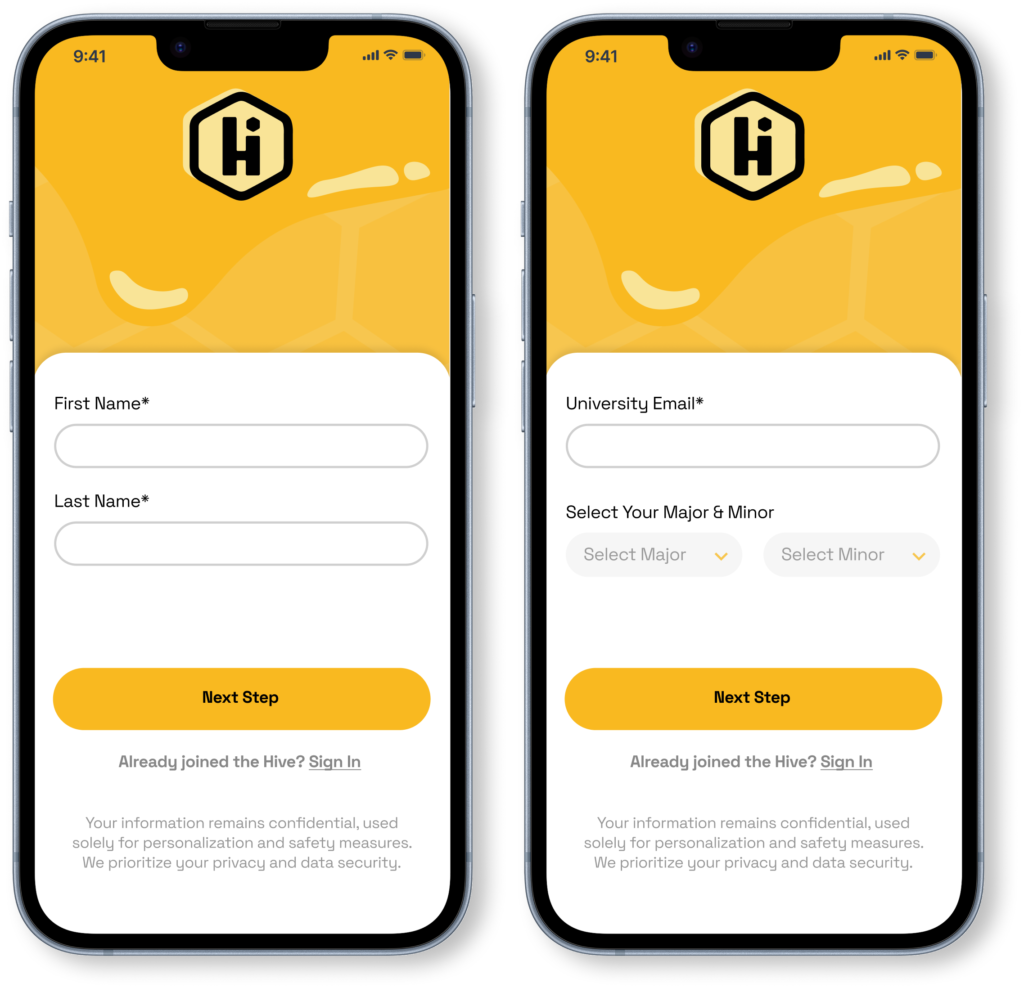
Verified Student Onboarding
Seamless onboarding that verifies your identity through your college or university. By entering your name, school, and area of study, Hive connects directly to school databases to confirm enrollment, ensuring each Hive is an authentic, student-only community.
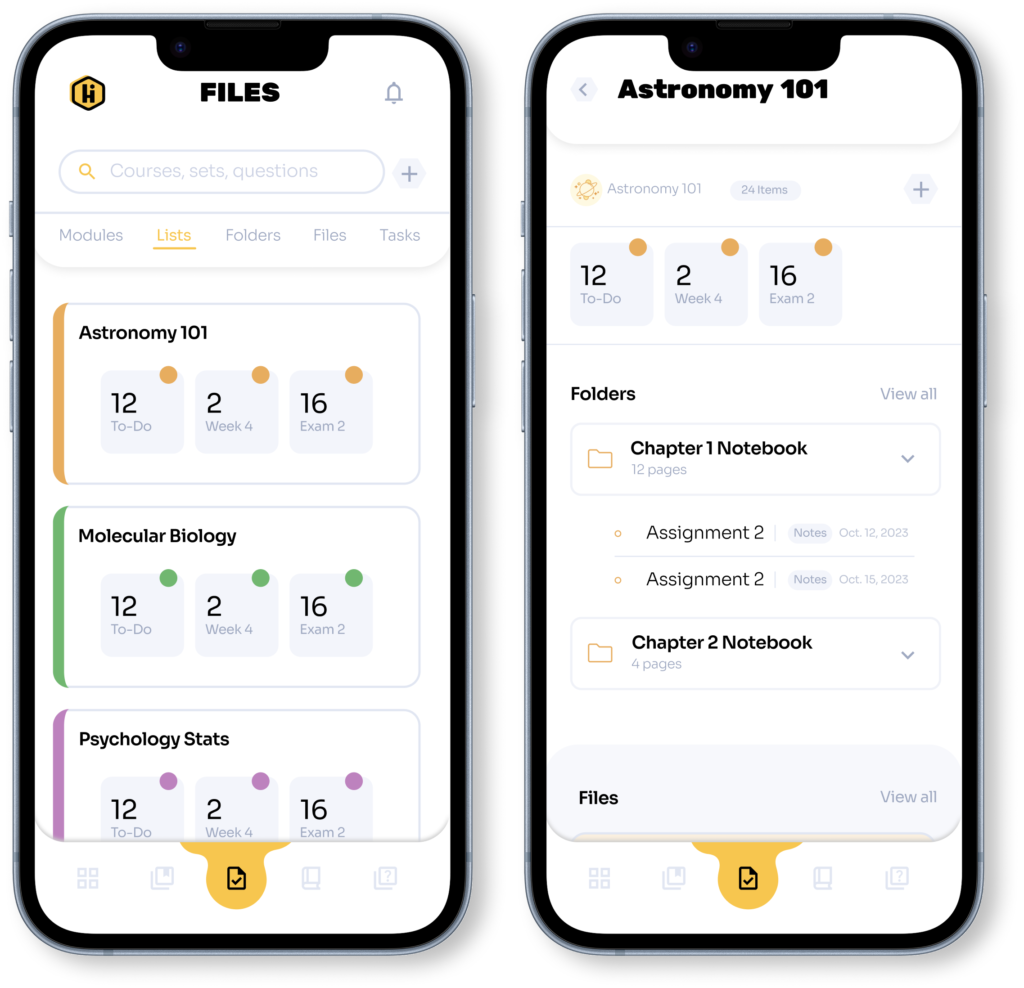
Course Files & Resources
A centralized hub for accessing lecture notes, readings, and assignments. Resource views are organized and sortable, reducing disorganization and improving study efficiency.
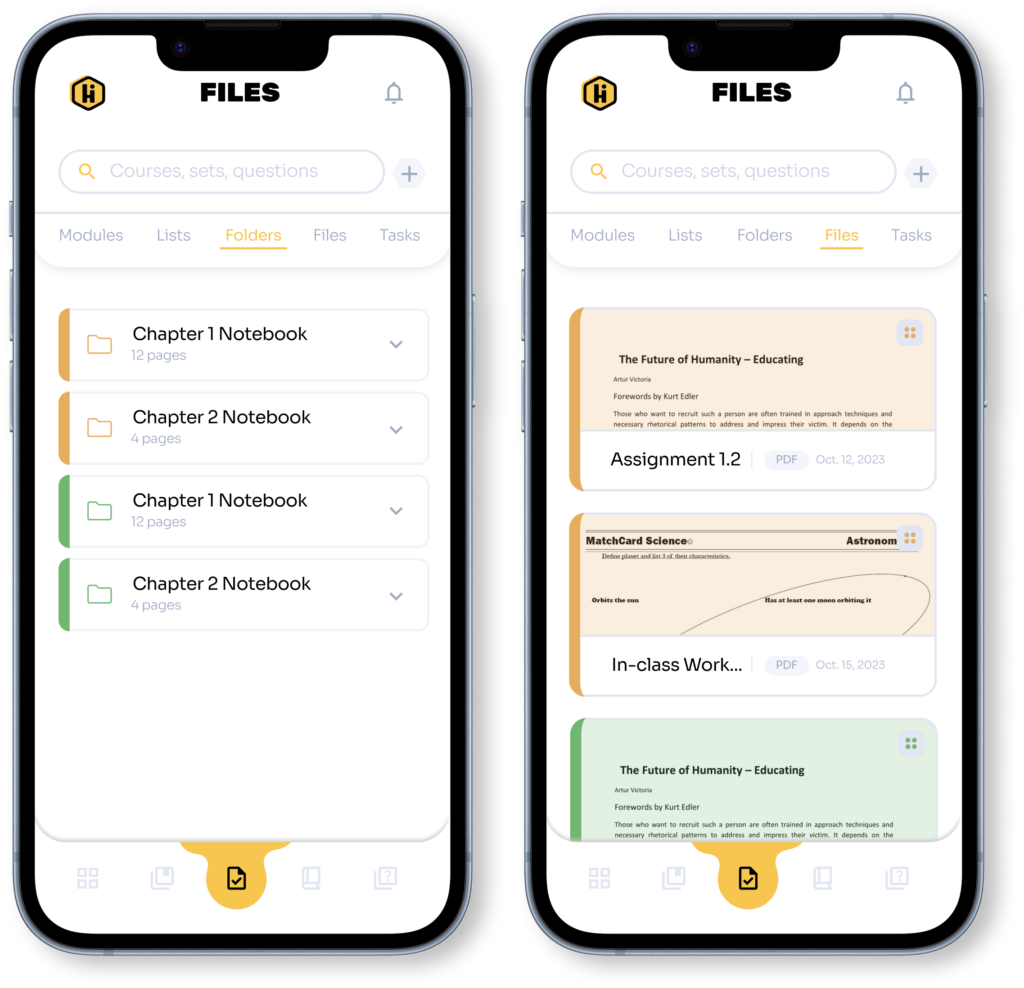
Resource Views
These views allow students to organize course materials by lists, folders, file type, etc. Sorting options make it easy to quickly locate specific files, reducing clutter and improving study efficiency.
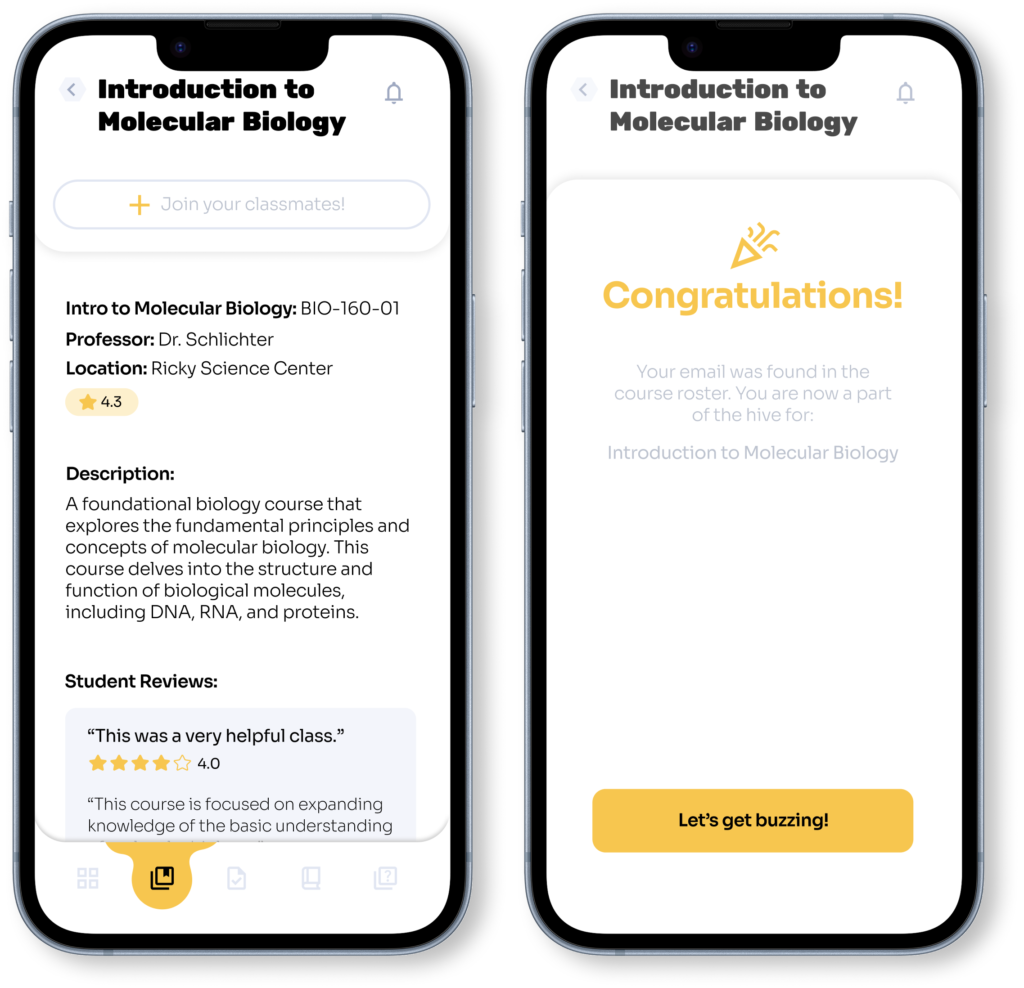
Join Courses & Discussions
Join a class to instantly access the full course experience — including lessons, shared resources, and a dedicated class discussion space. Streamlined navigation keeps everything in one place, encouraging collaboration and connection between students and instructors.
Discovery
While students already use a variety of tools to communicate and manage coursework, it was unclear whether these platforms truly supported how students collaborate academically. To better understand existing behaviors, I examined how students currently communicate, share resources, and collaborate across classes. I analyzed commonly used platforms and reviewed patterns in how students adapt these tools to identify gaps, pain points, and opportunities for improvement.
Key Insight: Students are forced to piece together their academic workflow across multiple platforms.
1. Communication happens outside the LMS, even when coursework lives inside it
Students primarily use tools like Discord, GroupMe, or Microsoft Teams for quick communication, while LMS platforms like Canvas are used mainly for assignments and announcements. This split forces students to constantly switch contexts when collaborating on classwork.
2. General-purpose messaging tools create noise, not focus
Messaging platforms excel at real-time conversation but lack academic structure. Group chats become cluttered, important messages get buried, and conversations drift off-topic, making it difficult to reference information later.
3. Students organize their work by class—not by feature
Across platforms, students mentally group information by course. However, most tools organize content by function (chat, files, announcements), forcing students to adapt their behavior to the platform instead of the platform supporting their mental model.
Competitor Analysis
To understand how students currently communicate and collaborate academically, I analyzed platforms students already use alongside an LMS with discussion boards.
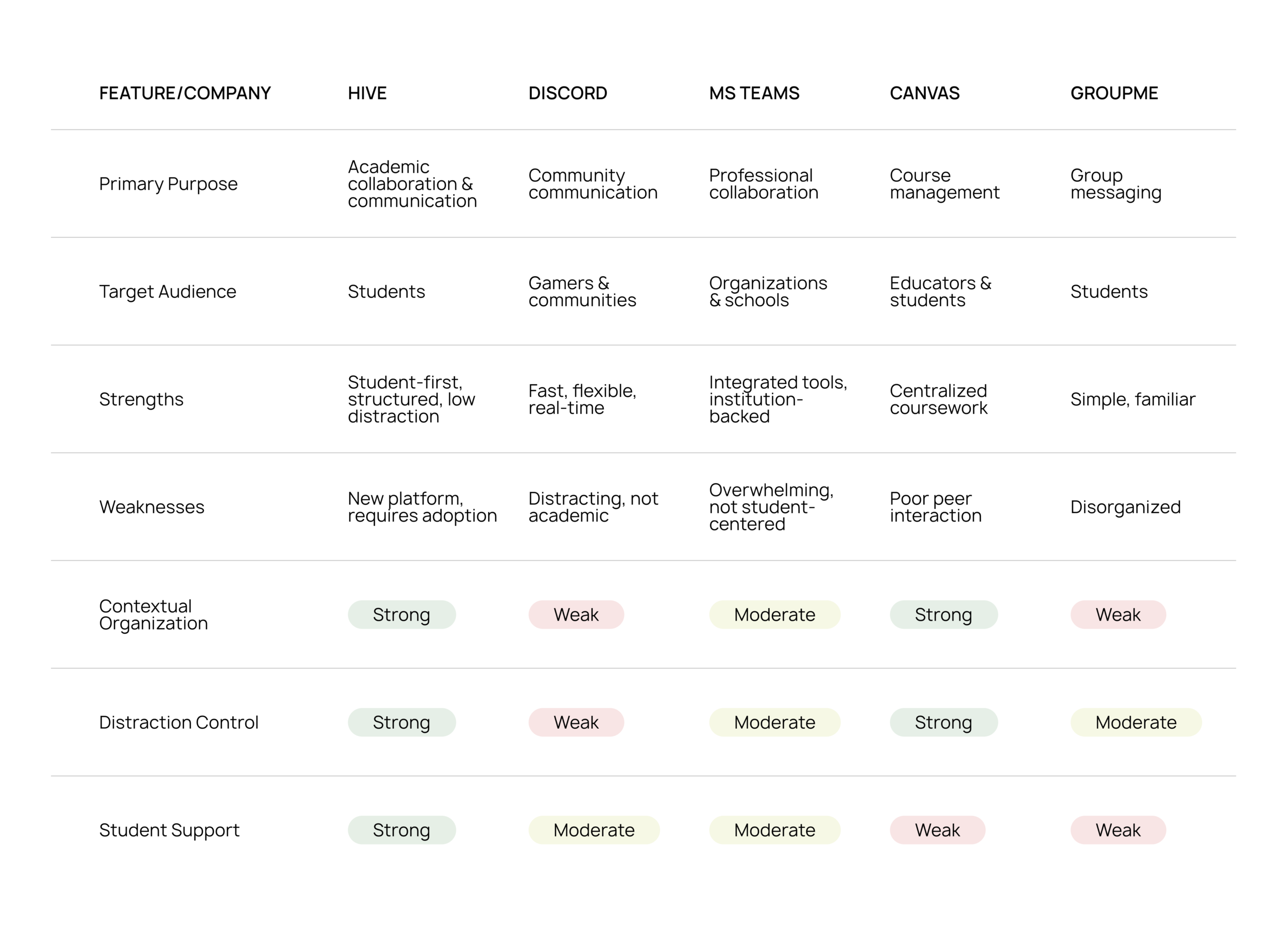
Communication-first tools like Discord and GroupMe are strong at real-time messaging but lack structure and academic organization. In contrast, Canvas provides structure and course organization but offers limited, slow, or disengaging communication tools. Microsoft Teams sits between these extremes but prioritizes professional workflows over student-specific needs.
Key Insight: No single platform fully supports student collaboration in an academic context.
Students are forced to piece together multiple tools to communicate, manage coursework, and collaborate. While individual platforms perform well in isolation, relying on several disconnected tools increases context switching and cognitive load.
These gaps helped define the core priorities for Hive. Rather than competing with existing tools on every feature, Hive focuses on combining the strongest aspects of each: real-time communication from messaging platforms, academic structure from LMS tools, and a class-centered organization that aligns with how students already think about their coursework.
Ideation
Sketch & Brainstorm
Through layout exploration and rapid ideation, I began to hone in on specific goals and interactions within the app.
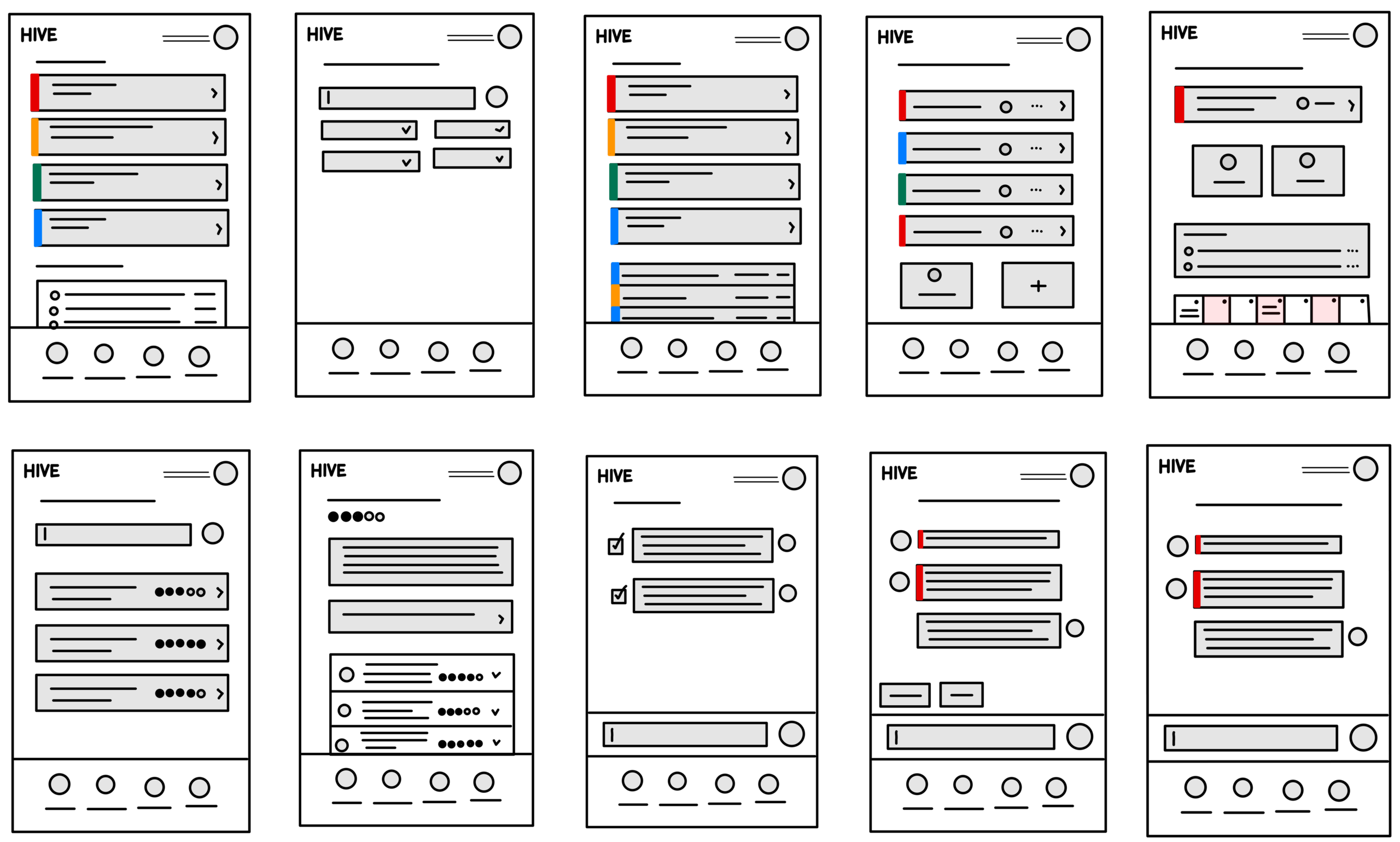
My ideation sessions revealed that a class-centered layout was essential.
As I explored different app layout options, it became clear that feature-based navigation created a fragmented experience. When communication, resources, and collaboration were separated into distinct sections, the app felt disconnected from how students actually organize their academic work. Centering the layout around classes allowed these elements to live within the same context, resulting in a more intuitive and cohesive experience.
Mid-fidelity
After working through my sketches, I cross referenced common ideas with my goals and began to hone in on key experiences that were relevant to students.
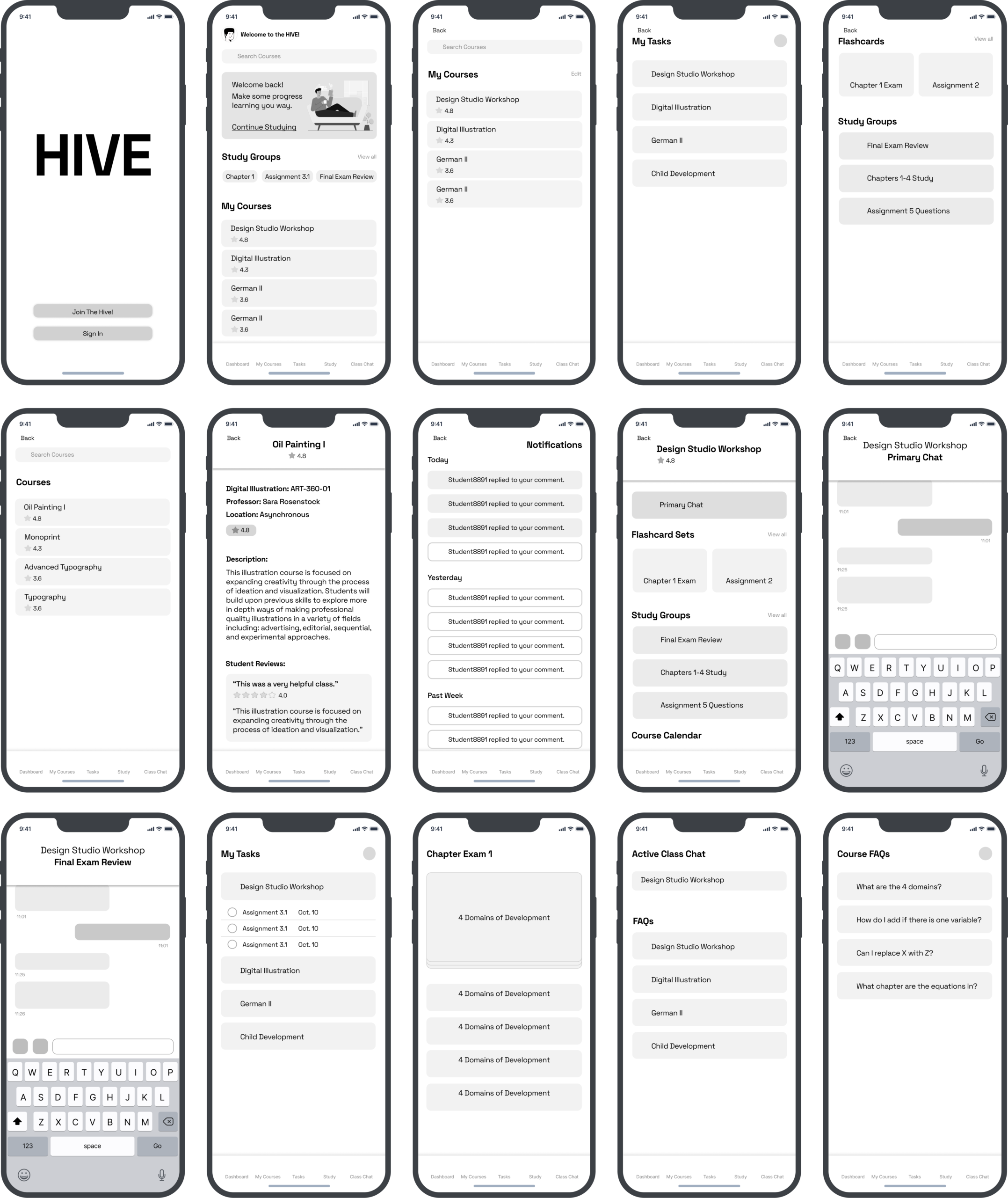
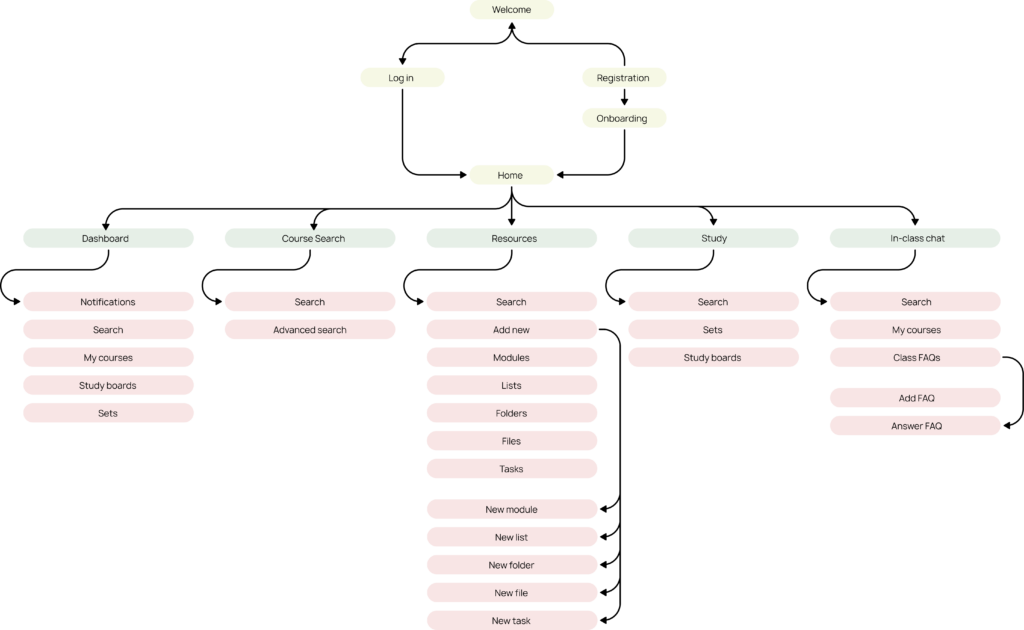
Information Architecture (IA)
To bring even more clarity and order to my design, I mapped out the hierarchy of content and features.
Reflection & Next Steps
Designing Hive reinforced the importance of grounding solutions in real user behavior rather than existing feature sets. By analyzing how students adapt current tools for academic collaboration, I was able to identify meaningful gaps and define a focused product direction.
With additional time, the next step would be to validate Hive with students through usability testing to assess whether the class-centered layout reduces platform switching and improves collaboration. Future iterations would focus on refining communication workflows and improving the discoverability of shared resources while maintaining a focused, low-friction experience.